
Feature
Why 2026 Is Not a Hype Year for CORE, but the Start of the Actual System
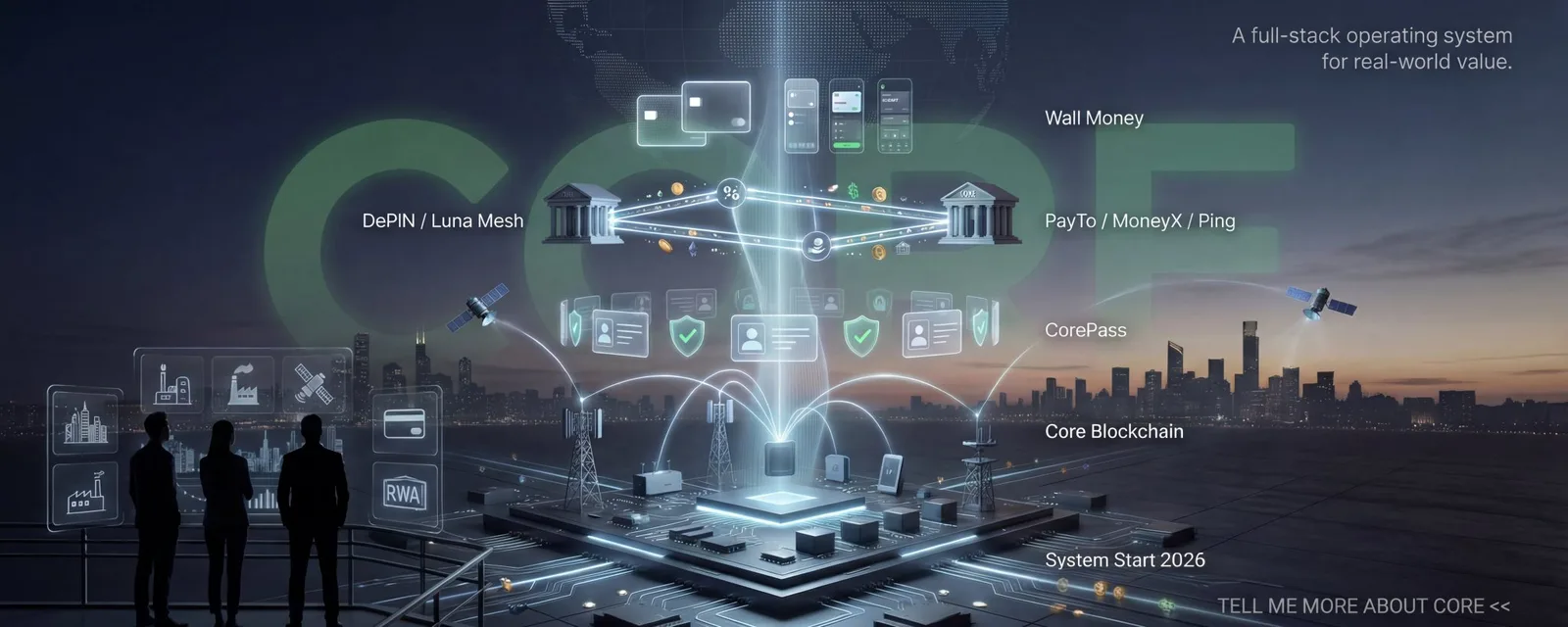
While everyone talks about tokenization, stablecoins and DePIN, Core Blockchain, CoDeTech and ARAX have quietly built an end‑to‑end operating system for RWAs, payments and infrastructure – with Wall Money as the ignition point.
1. Everyone Talks About Tokenization. One Player Delivers.
2026 is full of buzzwords: RWAs, MiCA, DePIN, Stablecoins 2.0. Look closer and you keep seeing the same pattern:
- Either a fast chain without identity.
- Or a nice wallet without a settlement rail.
- Or a RegTech slide deck without a real L1 underneath.
Core Chronicles #10 marks a different point: A stack that has been built in the background for thirteen years without VC money is now moving into everyday life – from IoT bolts to Visa cards.
2. Three Actors, One Masterplan
To understand the big picture, you need to separate three layers:
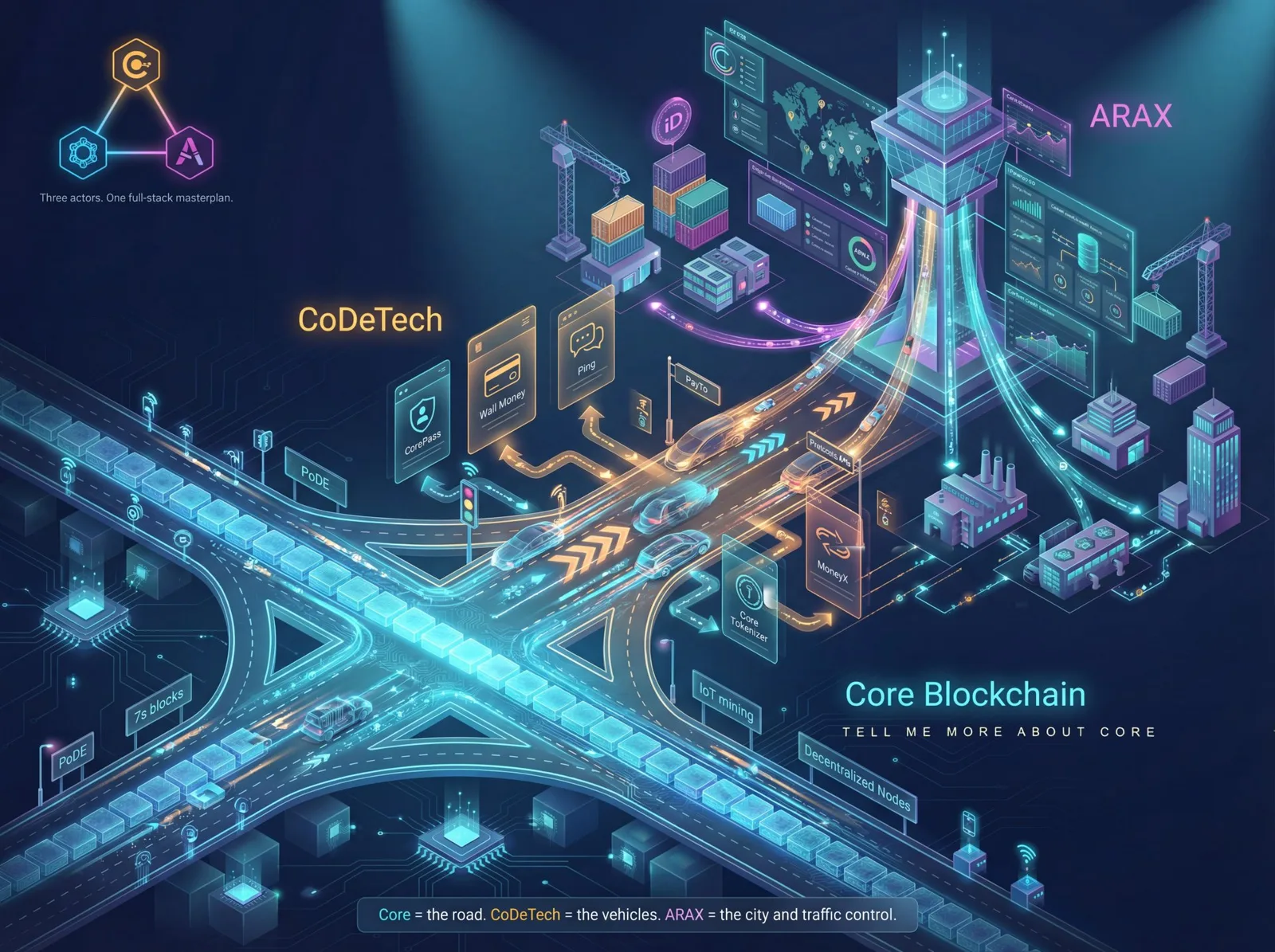
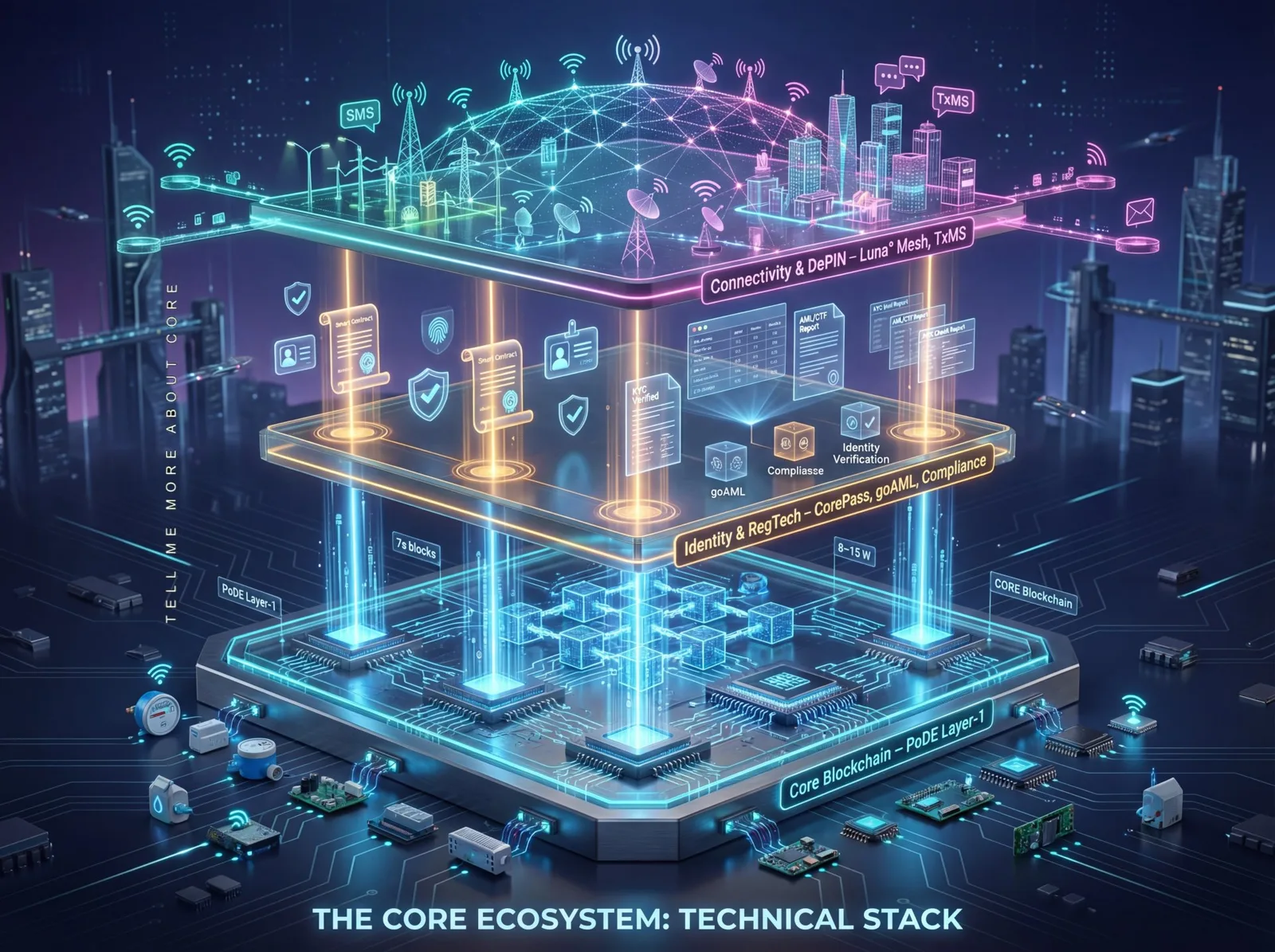
- Core Blockchain Layer‑1 with a PoW variant called Proof of Distributed Efficiency (PoDE), ED448 cryptography, 7‑second blocks and finality after ~42 seconds. Mining runs on IoT devices with 8–15 watts – from water meters to single‑board computers.
- CoDeTech Builds the products and protocols on top: CorePass, Ping Exchange Exchange, PayTo, MoneyX, Wall Money, ARK Shopify plugin, Core Tokenizer, Swaptopia, Ting & Stage, Heyo.
- ARAX Uses this stack for enterprise solutions: smart cities (Tuzla), carbon‑credit systems, Digital Product Passports (DPP), Environmental Vehicle Passports (EVP), life‑settlement platform VERAT and a full BaaP layer (Blockchain‑as‑a‑Platform) for data, AI and reporting.
A simple mental model: Core is the road. CoDeTech builds cars, traffic lights and navigation. ARAX runs logistics, city planning and traffic control on top.
3. The Base Layer: A PoW That Fits the Real World
Classic PoW scales poorly, burns energy and centralizes mining in warehouses. CORE chose a different path:
- PoDE: a modernized Proof of Work that runs on normal hardware and IoT devices.
- Performance: a block every 7 seconds, finality after 6 blocks – fast enough for institutional payments.
- Ecology: miners consume 8–15 watts – less than an LED bulb – and can sit directly in sensors, meters or vehicles.
- Scaling: millions of transactions per second as an architectural goal, without sacrificing decentralization or security.
This turns the blockchain from an abstract database into an invisible infrastructure layer that integrates into factories, street lighting, fleets or energy meters.
4. Identity & Compliance: CorePass + RegTech
Tokenization without regulation‑grade identity is worthless. CorePass tackles exactly that:
- Self‑Sovereign Identity (SSI): Digital identity on the user’s smartphone, with verified attributes (KYC/KYB), no central database.
- Selective Disclosure: Instead of sharing a full passport scan, users share cryptographic proofs (over 18, resident in country X) without exposing raw data.
- Monetization: When a service uses your verified CorePass data, part of the fees can flow back to you – data as yield, not as loot.
On the RegTech side it gets concrete: Core developers built the first open‑source Oracle and library for the UN goAML 5.0 system (XmlGoAML) to connect blockchain activity with AML reporting.
This makes life‑settlement bonds, high‑value insurance policies or future MiCA‑compliant tokens actually workable on a public chain. For finance professionals, it means real‑time compliance that doesn’t check after the fact, but only lets transactions through if they meet the rules.
5. Infrastructure & DePIN: Luna Mesh Instead of ISPs as Single Point of Failure
Connectivity is the blind spot of most blockchain roadmaps. No network, no wallet, no transaction.
Luna Mesh flips this:
- Decentralized mesh network using multiple frequencies – from sub‑GHz radio to Wi‑Fi – with devices talking directly to each other.
- Epidemic routing: data is stored and forwarded until it reaches a node with internet – like word‑of‑mouth, but cryptographically secured.
- TxMS / 0G: blockchain transactions via SMS/MMS; payments in the middle of nowhere that later settle over mesh and satellites (LEO) onto the Core chain.
Use cases:
- Smart City Tuzla: street lighting, energy, sensors running over Luna Mesh and billing on Core – including energy optimization.
- Access‑control systems that log entries reliably from rooftops without internet, with an audit trail on‑chain.
This makes “DePIN” tangible: physical infrastructure run by many participants and incentivized by tokens (XCB/CTN) – with ARAX orchestrating the system.
6. The Value Rails: PayTo, MoneyX, Ping
Tokenized assets without settlement rails are just fancy databases. The real magic happens here:
PayTo – the programmable payment rail
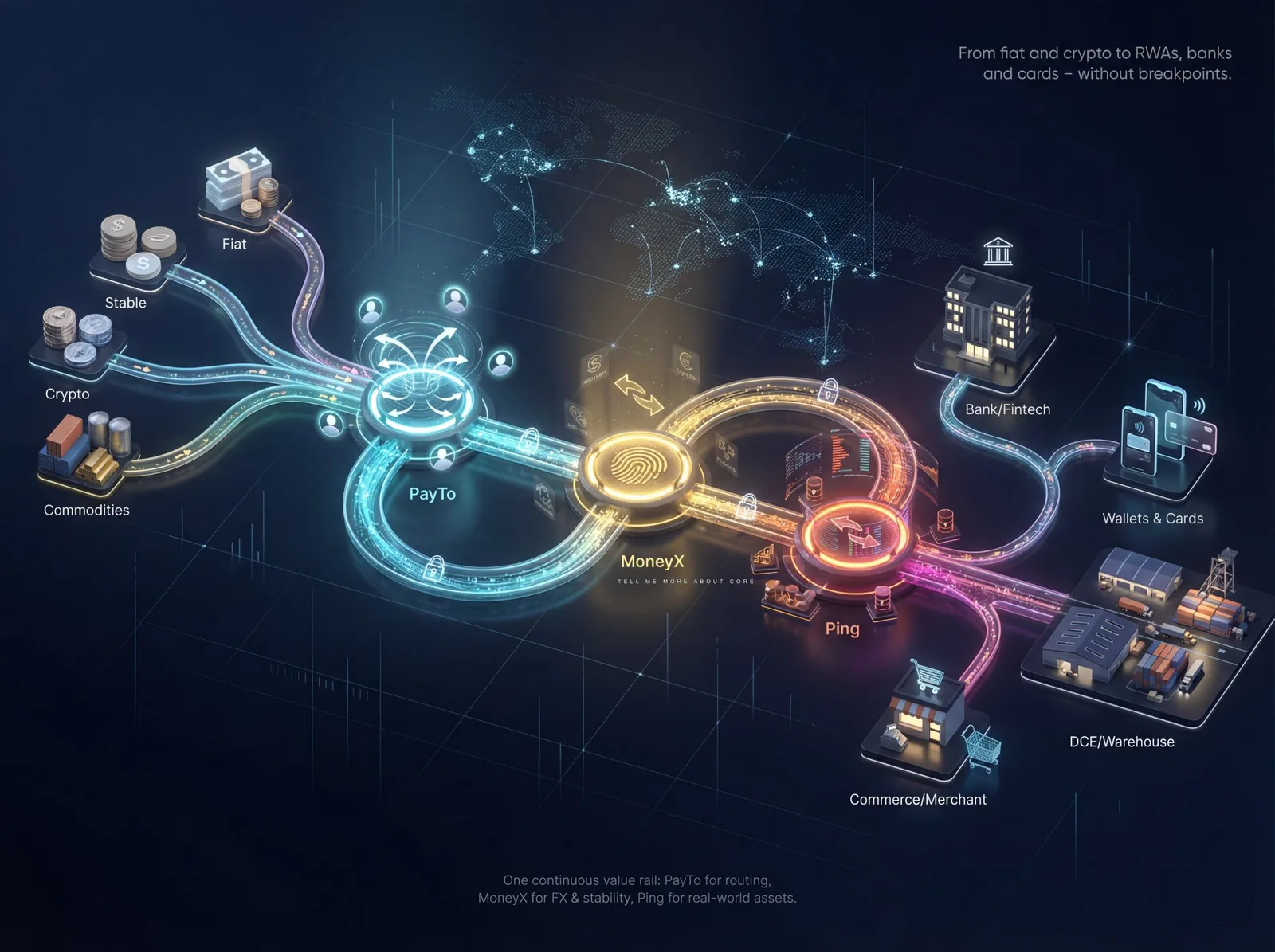
- Open‑source protocol with ICAN (International Crypto Account Number) as a crypto‑IBAN.
- Logic‑based routing: “I pay in BTC, you want JPY stable?” – conversion happens within the transaction flow.
- Fully identity‑bound (CorePass), with KYC/KYB/AML metadata – auditable in the real world.
- Supports splits, recurring payments, event triggers and offline payments via TxMS.
MoneyX – Stable Token Class 1 (STC1)
- 1:1 fiat‑backed stable tokens, not just USD but potentially hundreds of currencies.
- Mathematically verifiable backing using “fingerprints” – no PDF attestations, but cryptographic proofs per token.
- Fully programmable – ideal for treasury flows, cross‑border payroll or DeFi‑driven trade finance.
Ping Digital Commodities Exchange
- Hybrid exchange for metals, agri goods, energy, carbon credits and more – with Digital Product Passports and unique token IDs.
- DvP (T+0) settlement: once payment is confirmed, digital ownership transfers and physical goods sit in certified storage.
- Fully CorePass‑verified with a RegTech layer on top – MiCA‑ready out of the box.
For finance, this means: a continuous rail that runs from tokenized goods through FX all the way to card payments – without breakpoints between crypto and banking.
7. The User Interface: Wall Money as Ignition
All of this stays academic if it never reaches everyday life. That’s exactly where Wall Money comes in: a multi‑asset neobank, built on the Core Blockchain, that combines fiat, stable tokens, cryptocurrencies and digital commodities in one interface.
Wall Money offers:
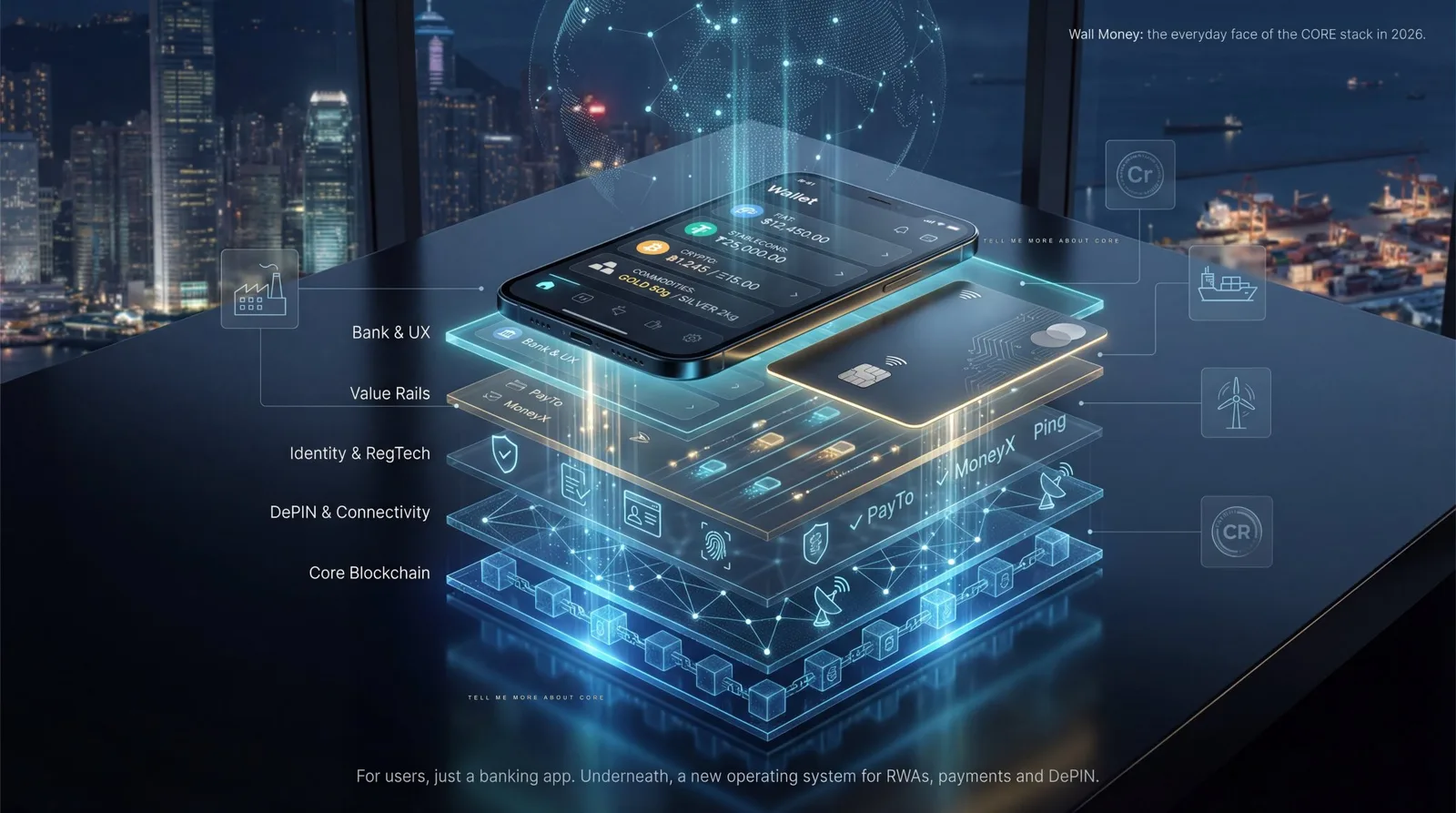
· Multi‑asset wallets that hold fiat currencies, stable tokens, cryptocurrencies and RWAs side by side.
· Global card acceptance via Visa and UnionPay, both physical and virtual.
· A real‑time engine that converts across 700+ currency pairs between fiat, stables, crypto and commodities – without hidden spread mark‑ups.
On‑ and off‑ramp functions connect bank accounts, exchanges and RWA positions directly to spendable liquidity on the card – without forcing users through a patchwork of third‑party services.
In the background, the very rails the ecosystem has been building come together: PayToas programmable payment rail, MoneyX as global FX‑stable layer and Ping Exchange as the trading venue for tokenized assets.
The crucial difference to many “crypto neobanks”: Wall Money doesn’t float in mid‑air, it is embedded in an existing banking group. Instant intra‑bank transfers within the Wall‑Money partner network are part of the standard flow, powered by classic protocols like MT940 (SWIFT) and SEPA XML – without forcing front‑, middle‑ or back‑office systems at the banks to be rebuilt.
That banking anchor is exactly what makes Wall Money interesting for regulated players: it is not a pretty app on top of an e‑money trick, but the visible surface of a tech stack that connects on‑chain innovation with a real, global banking infrastructure.
Or, in the words of Ockert Loubser:
“We are in fact part of a group. A global banking group. With already established banking partners. That’s the difference.”
To anyone reading under the hood, it is the consumer layer of a fully integrated Web‑4.0 stack.
8. Why This Matters for Crypto and Finance
For professional readers in crypto and finance, this setup is compelling for several reasons:
· Bank connectivity instead of “card wrapper”: Wall Money does not act as an isolated fintech shell, but operates within a global banking group with established partner banks, Visa/UnionPay connectivity and direct integration into SWIFT and SEPA flows via MT940, SEPA XML, ICAN and ISO‑20022 structures – in other words, it plugs into existing core‑banking plumbing without asking anyone to rip it out.
· Compliance by design instead of RegTech theatre: goAML integration, a RegTech framework built on CorePass, GDPR‑compliant SSI identity and a MiCA‑oriented stable‑token architecture make the ecosystem connectable for banks, brokers and asset managers without forcing them to abandon their compliance logic.
· End‑to‑end rails from RWA to card: Tokenization via Core Tokenizer and ARAX BaaP, trading and DvP settlement on Ping Exchange Exchange, programmable payments with PayTo, FX‑stable layer via MoneyX and cash‑out via Wall‑Money cards form a closed value chain – without media breaks between on‑chain assets and real‑world spending.
· Infrastructure resilience through DePIN: Luna Mesh, DePIN storage and TxMS (0G SMS‑based transactions) reduce dependency on single ISPs and cloud providers – critical for smart cities, utilities, Industry 4.0 and markets with weak infrastructure.
In short: this is not just “another L1 plus wallet”, but a full stack that unifies identity, connectivity, tokenization, payments, RegTech and banking in one system – not only on the whiteboard, but with live infrastructure, real banking partners and a clear path into regulated markets
9. Conclusion: The Invisible Starting Gun
Core Chronicles #10 is not just another “release post”. It’s the technical press conference of a stack that is ready to move capital flows, supply chains and everyday payments onto a new operating system.
For crypto natives, it means: The next wave won’t happen on the N‑th EVM sidechain, but where tokenization, identity, payments and DePIN function as a single system.
For finance professionals, it means: There is now a platform where MiCA‑compliant stable tokens, tokenized bonds, commodities and carbon credits can be combined with real‑time settlement, verified identity and provable sustainability – without media breaks.
The real question is not whether this model is coming. The question is who will be the first to use it in production – and who will look back at Core Chronicles in three years the way many look at the 2010 BitcoinTalk threads today.